

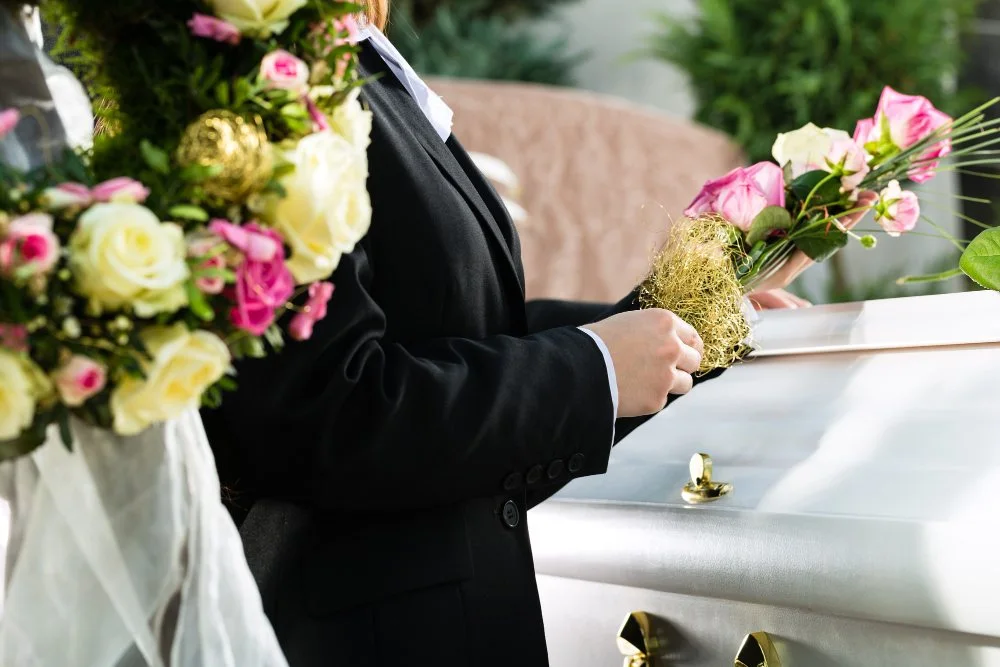

Funerals, Memorial Services
&
Ashes Scattering Ceremony
Table of Contents
Introduction
Role of A Funeral Celebrant
Approximately 60% of funerals in Australia are conducted by civil Funeral Celebrants. It is our role as a Funeral Celebrant to ensure that the service is conducted with the utmost professionalism and empathy. The Funeral Celebrant is the organiser of the flow and order of service, ensuring it is smoothly conducted and eloquently presented so that it is a fitting tribute to the person who has died.
A Funeral Celebrant conducts and leads the services in accordance with the family’s wishes, with the appropriate conveyances in dignity, sympathy and professionalism.
Funeral Celebrants are there to offer support and to assist the family with the structure and design of the funeral service.
Funeral Celebrants often work in a chapel, at a graveside, at a scattering of ashes and memorial services. Great care and compassion needs to be taken in accordance with the type of service.
As a Funeral Celebrant you will:
- meet with the family to discuss the service
- capture an image of the person who has died, to ensure an appropriate service is delivered
- after gathering the thoughts of the family, produce a unique ceremony
- write or assist with the eulogy
- liaise with family members and friends of the bereaved
- discuss with the family, their needs and thoughts around the service, such as readings, rituals, committal, music, tributes and presentation of the eulogy provide the family with adequate resources
- liaise with the Funeral Director
- try to ensure time is managed effectively
- offer thoughts and suggestions to the family around symbolism; perhaps special items placed on the coffin or a table, the lighting of a candle, a reflection visual, or the releasing of doves or balloons at the end of the service.
Within all human beings, there is an innate need to acknowledge life events through ritual and ceremony, and both religious and secular people need an avenue to celebrate and commemorate the lives of those dear to them.
Civil funeral services allow for an individually prepared service based on factors relevant to those who have passed away. They allow for mourners to focus on the life, rather than the death, of the deceased.
As a funeral celebrant, it is important to recognise that your clients will be going through the first stages of the grieving process. The funeral service has a very significant impact on how the loved ones can express their grief, which in turn becomes part of the healing process.
The role of a funeral celebrant can be a very difficult and challenging one, but being able to help people through a traumatic and significant time in their lives is greatly rewarding.
Relationship With The Funeral Director
As a Funeral Celebrant, it is most important to foster and maintain a good relationship with the Funeral Director.
The Funeral Director’s role includes, but is not limited to, being responsible for:
- arranging and confirming the style of funeral
- arranging and confirming the time and date and venue
- whether there is a committal or not and if that committal is public or private
- if there is to be a viewing
- the choice of casket• if there is to be and RSL or other tribute
- other service clubs’ involvement
- floral tributes
- advertising
- music: recording, broadcasting (ie Web links)
- catering
- stationery
The Funeral Celebrant’s role is to write and perform a meaningful ceremony and interact with the family and the Funeral Director to achieve.
Order Of Service
Please note this is a guide to a basic, traditional order of service. Families and celebrants are welcome to add, change, reorder and/or omit any parts.
As a Celebrant there is NO legal requirements for Funeral Ceremonies. The Celebrant has NO role in Death Certificates.
The Funeral Director will organise the Death Certificate from the Registry Birth, Deaths & Marriages.
Introduction
Celebrant welcomes all the guests and provides any applicable housekeeping announcements (phones on silent, ‘unplugged’ info, what’s happening after the ceremony etc.)
Readings
Readings and poetry are an integral part of funerals and memorial services. Funeral Celebrants are skilled in finding the right poetry and/or readings to reflect the life of your loved one.
Did your loved one have a favourite book or author? Did he/she recite poetry, have a favourite saying or a favourite song? If so, share this information with the Funeral Celebrant who may incorporate them in the Funeral Service as a true reflection of the person you are saying farewell to.
Eulogy
A eulogy is a speech given at a memorial or funeral service. It can be delivered by a family member, close friend, priest, minister or celebrant and it commemorates and celebrates the life of the deceased.
The eulogy is the speech during the funeral ceremony that talks about the life and character of the person who died. It acknowledges the unique life of the person and affirms the significance of that life for all who shared in it. It is usually delivered by someone who has known the deceased, however, there may be times where the family members are too distraught to either write or deliver a eulogy. If you are going to write the eulogy on the family’s behalf, encourage as many people as possible to share their memories with you so that you can use some anecdotes to personalise the eulogy as much as possible.
Perhaps you could enlist the help of a family member to co-write it, or suggest that if no one in the family is willing to deliver the eulogy, you could deliver it if they write it. Even if a family member has agreed to write and deliver the Eulogy, you should always have a copy so that you can assist if the family member breaks down during the deliver
Tributes from friends/Guests
There may be several people who wish to say something about the deceased; however, you should never issue a blanket invitation to guests. Not only will this make it harder for the already grieving family, but many chapels book services back to back, and it would be unwise to allow the service to longer than the allocated time. Tributes by family and friends should be limited to a maximum of 5 minutes each
Reflection
Some services may also include a PowerPoint presentation or slideshow or another type of audio visual presentation of the deceased.
Often the family or friends will have an idea of what song they would like played, It is not inappropriate to have something light-hearted or comical, particularly if it is in keeping with the personality of the deceased.
Committal
This is possibly the hardest part of a funeral for family and friends to endure.
For this reason, the committal should be brief. There are many different ways that the committal may take place, and this is largely dependant upon the chapel or funeral company. You may choose a short poem to read before the committal.
The committal should include wording that gives closure to the ceremony. At this time you would usually ask the participants to stand.
Sample Committal:
“We don’t know why he left so early. We thought he should have been here for longer. Frank’s life goes on and his legacy is seen in the faces of his children and grandchildren. This time of physical parting is going to be the most difficult time of all. Now we say our last goodbye to Frank.”
Final Tribute
After committal the guests will disperse, so this is the last chance you have to make any general announcements or give any directions.
If the family has chosen a private burial, you will also need to advise guests of the arrangements.
Code of Conduct
While I remain a member of the Australian Federation of Civil Celebrants Inc. (AFCC), I agree to comply with the spirit, intent and provisions of this Code of Ethics and accept the responsibilities of such implied by membership of the association:
- To maintain the highest levels of business, professional and personal standards;
- To respect in all circumstances the privacy, confidentiality and trust expected by clients and members of the public;
- To provide sufficient, timely, transparent and accurate information about the range and extent of services available, the costs of those services and the functions and responsibilities accepted for and on behalf of clients;
- To respect the personal choices of clients, having due regard to the diversity of beliefs, cultural backgrounds and practices;
- To ensure that all personal advertising is in good taste and directed at informing the public without indicating any conflicts of interests;
- To be conversant with relevant legislation and regulations directly or indirectly applicable to celebrancy and to comply with such;
- To respect the ethical expectations of other professionals with whom I interact in my celebrancy activities; and
- To inform and provide access to relevant client advisory services and authorities to facilitate mediation or resolution of any
Funeral Service Booking
Craft a Beautiful Memorial Service Now
A Lasting Tribute